


RESOURCES / BLOG / POLICY
What Is Engagement Bait, and Why Does It Hurt?
Contents
What engagement bait is
Engagement bait is a pattern that pushes viewers toward artificial likes, comments, or shares rather than genuine interest: "the video will stop if you don't like it," "bad luck if you don't comment," "send this to 10 people or else..." all fall into this category.
These patterns are usually used with good intentions, as a way to "get more engagement." But from the platform's perspective, they produce a signal that doesn't reflect genuine viewer interest, which can end up working against the account long-term.
Why it's treated as a risk
Instagram tries to separate genuine interest from artificially triggered engagement. Content that uses engagement bait isn't removed, but it can be shown less in recommended surfaces — the platform may read the pattern as "low-quality engagement." That assessment looks at how the engagement was obtained, not at the raw number of comments or likes itself.
Common patterns
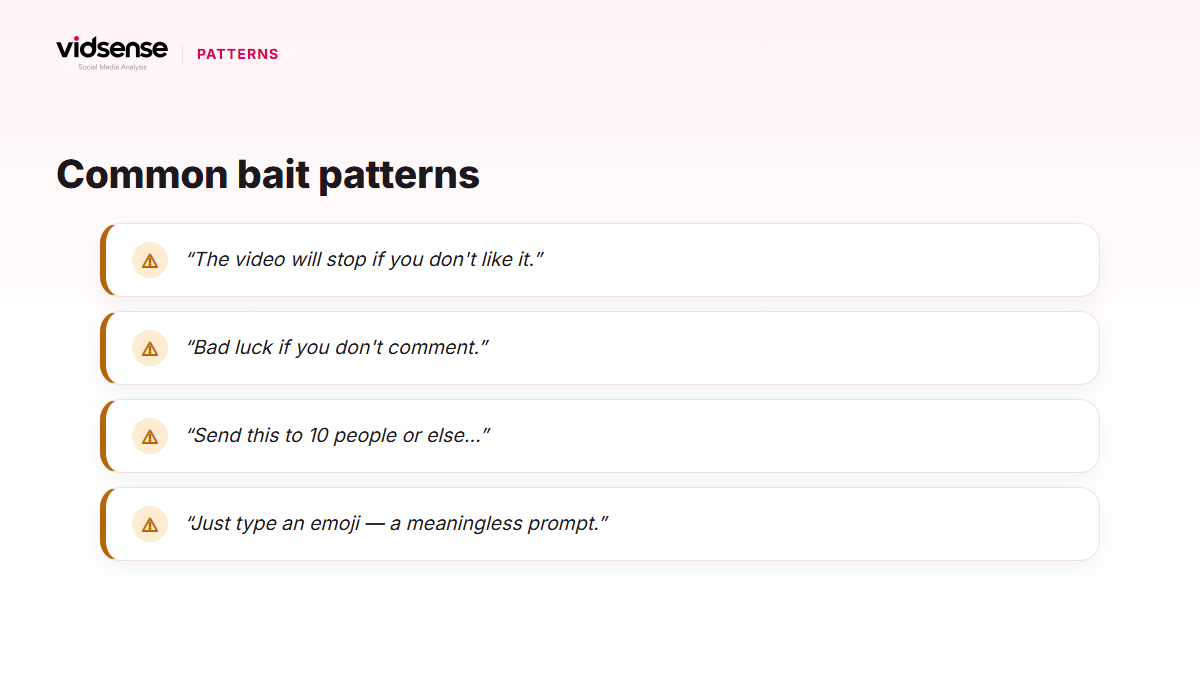
- "Don't scroll past this, comment or else..."
- "No likes, no part two."
- Superstition-driven pressure like "share this or your luck runs out."
- Fake "which one would you pick, comment below" questions asked purely to inflate comment counts, without genuine curiosity behind them.
- "Tag someone, win a chance" giveaways with a required-action structure — some formats are acceptable, some aren't; check Instagram's own promotion rules.
- Meaningless prompts like "just type an emoji" used purely to inflate the comment count artificially.
Real engagement vs. bait
Asking a question or inviting comments isn't a problem by itself. The difference is whether the invitation is natural or manipulative. "What do you think, comment below" is a natural invitation; "comment or you'll miss your chance" is artificial pressure.
Why it actually hurts
Even if it inflates numbers short-term, this kind of content can hurt both recommendation eligibility and how the account is perceived over time. As viewers start recognizing the pattern, trust erodes — it reads as manipulation rather than a genuine question.
That erosion of trust can outlast the number: once an account becomes known for engagement bait, viewers may approach even its genuine questions with suspicion.
Example: from bait to a natural invitation
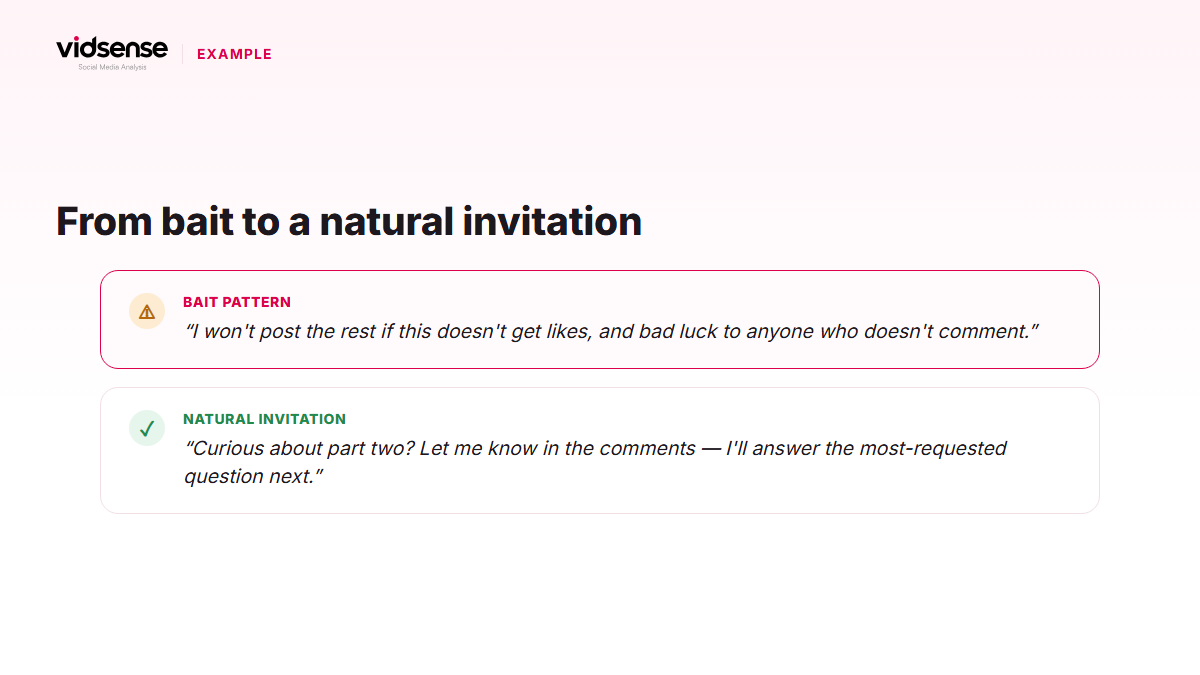
Bait pattern: "I won't post the rest if this doesn't get likes, and bad luck to anyone who doesn't comment." This pushes viewers toward engagement through artificial pressure rather than genuine interest.
Natural invitation: "Curious about part two? Let me know in the comments — I'll answer the most-requested question in the next video." There's still an invitation to engage, but it offers the viewer a real choice and real value, with no threat or condition attached.
Practical checklist
- Does the caption contain a pressuring pattern ("or else...", "if you don't tag...")?
- Is the invitation to engage genuine curiosity, or an artificial condition?
- Do any giveaway or contest rules match Instagram's own promotion guidelines?
- Is the same pattern repeated across multiple consecutive posts?
- Does the invitation offer real value, or is it purely about inflating a number?
One common question
Is a poll or a "which one would you pick" question always bait? No. A question asked out of genuine curiosity, offering the viewer a meaningful choice, isn't a problem — it's a natural form of engagement in plenty of content. The difference is whether the question carries value on its own, and whether not answering implies any kind of "penalty."
Check it with VidSense
VidSense flags engagement-bait patterns during text and content checks and suggests a more natural alternative. Create a free account to use the text check and, for videos or images, the content check.
Source: Instagram Help Center — Recommendation eligibility, Meta Transparency Center — Spam.
Contents
Check your content before you post it.
Use Content Check to see potential risk signals before you publish.
Check your content →Keep reading
Policy · 5 min read
Music and Copyright in Reels: Which Audio Is Safe to Use?
Licensed music, original audio and the Sound Collection are not the same thing in Reels. Here is which audio shows up for which account type, what happens when a track is muted later, and how to stay on the safe side, with official sources.
October 17, 2026
Policy · 5 min read
Instagram Giveaways and Contests: Meta's Rules and Türkiye's Law
A giveaway post answers to two rulebooks: Meta's Promotion Guidelines and the Turkish regulation on prize draws. This guide covers what can be verified from official sources on both, where giveaways overlap with engagement bait, and a pre-publish checklist.
October 12, 2026
Policy · 4 min read
The #ad Tag: Turkey's Influencer Advertising Guide
Disclosing paid partnerships with #ad or #partnership is required under platform rules and Turkish consumer regulation. This guide covers how to do it correctly.
October 5, 2026