RESOURCES / BLOG / POLICY
When you post paid brand content, or content made in exchange for a product or service, making the commercial nature of that post clear is expected both under platform rules and under consumer-protection regulation in the markets your audience is in — Turkey included. Disclosure exists so the viewer knows, before anything else, that what they're looking at is an ad.
This isn't just a legal formality; it's also part of protecting the viewer's trust. Knowing whether a recommendation is paid or a genuine personal opinion shapes how much weight a follower puts on it.
Turkey's Ministry of Trade, through its Advertising Board (Reklam Kurulu), has published a guide for commercial advertising and promotion carried out by social media influencers. Under it, commercial content must be disclosed clearly enough for an average consumer to recognize it at first glance — a vague or hidden note, say buried only in a bio, doesn't meet that bar.
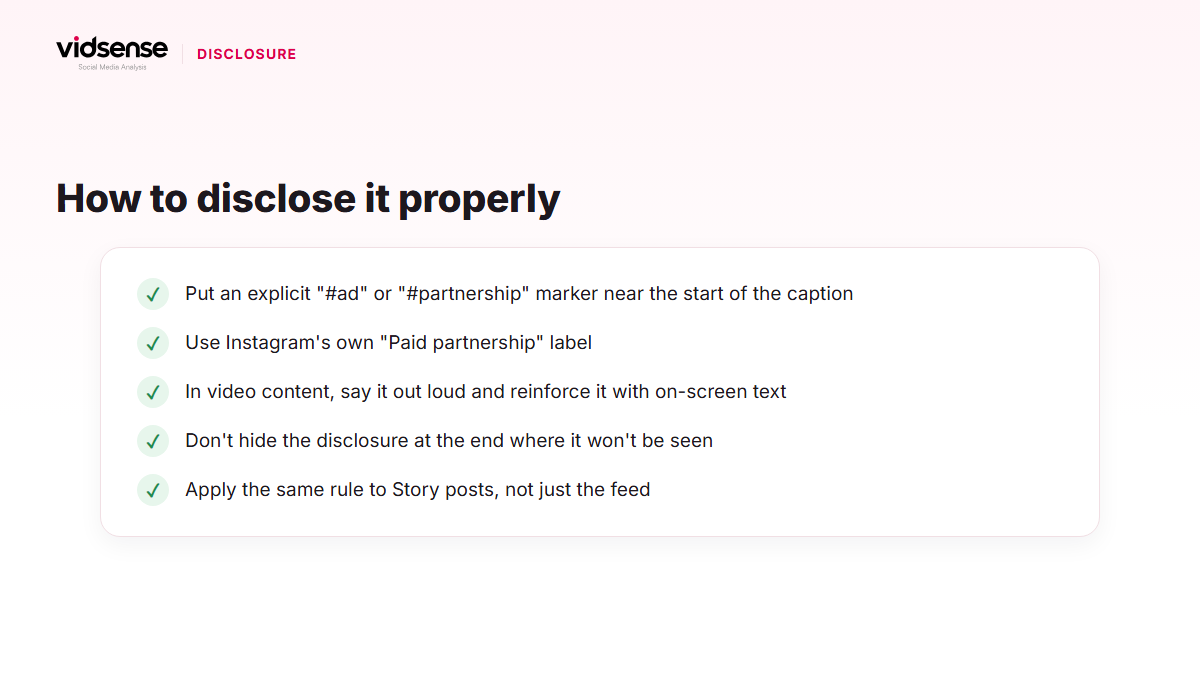
Promotion that doesn't clearly disclose its commercial nature can carry both legal risk, under Turkish consumer-protection rules, and reach risk — the platform may read it as non-transparent promotion. Sharing a personal discount code or affiliate link without ever stating the commercial relationship raises this risk further.
Check your content before you post it.
Use Content Check to see potential risk signals before you publish.
Paid sponsorships, posts made in exchange for free products, affiliate-link content, and anything a brand directs you to post all fall under this. Praising a product you bought yourself, with no relationship to the brand, does not count as commercial partnership content.
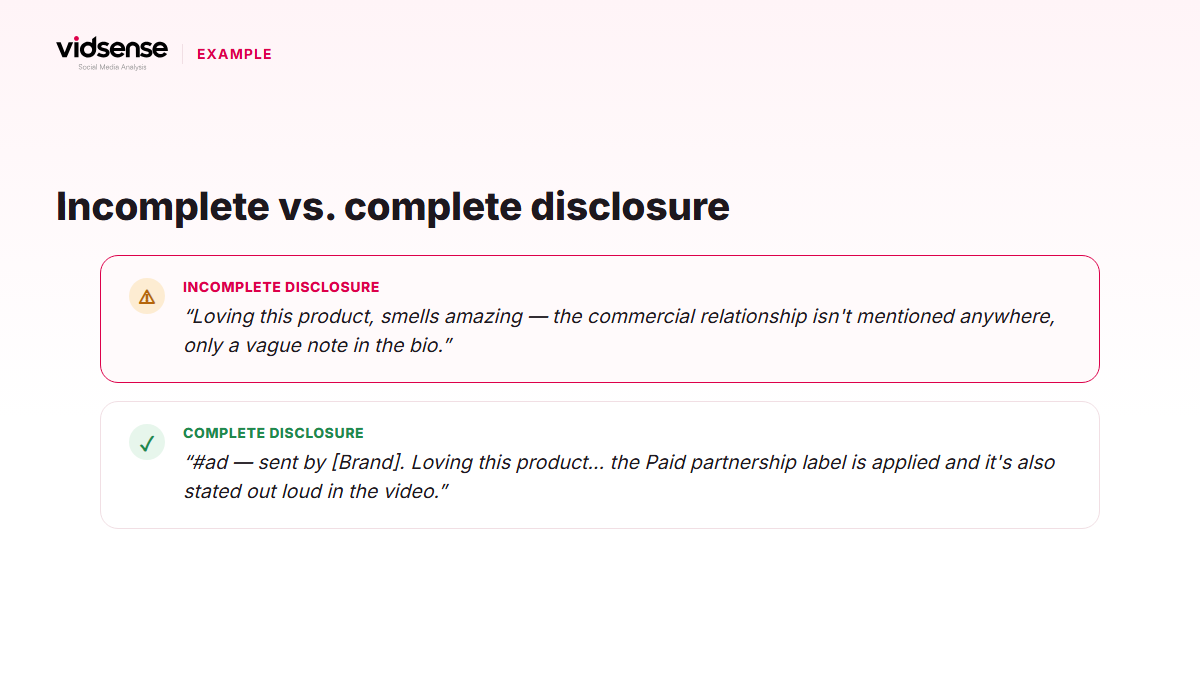
Incomplete disclosure: a post featuring a skincare product sent by a brand just says "Loving this product, smells amazing." The commercial relationship isn't mentioned anywhere in the post — only a vague "partnerships: [email]" note sits in the bio. A viewer looking at the post itself has no way to tell it's promotional.
Complete disclosure: the same post opens with "#ad — sent by [Brand]. Loving this product, smells amazing," Instagram's "Paid partnership" label is applied, and in the video version the creator says out loud "this content was made in partnership with [Brand]." Same product, same praise — but the commercial nature is clear from the very first line.
If I bought the product myself, do I still need to disclose anything? No. If there's no commercial relationship with the brand at all — no gifted product, no payment, no discount code — it's just a personal opinion, not commercial partnership content, and no disclosure is required. Disclosure only applies when a real commercial relationship exists.
VidSense's content check can flag content that looks like undisclosed partnership content before you publish. Create a free account to use the text check and, for videos or images, the content check.