RESOURCES / BLOG / CONTENT
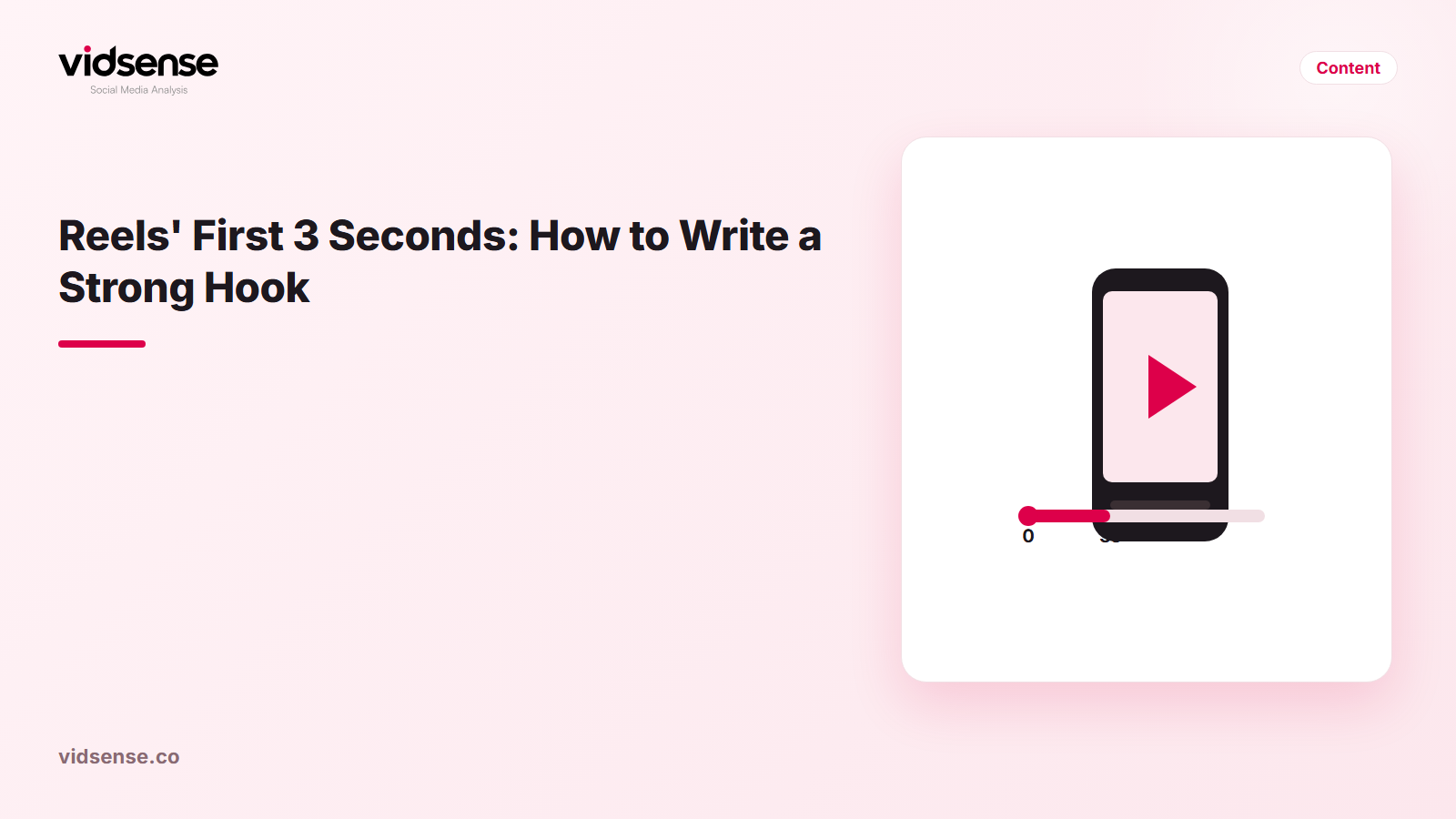
Most viewers decide whether to keep watching a Reel within the first few seconds. A hook that doesn't hold attention there means the rest of the video — however good — gets watched by fewer people. The opening's job isn't to explain the topic; it's to create a reason to stay.
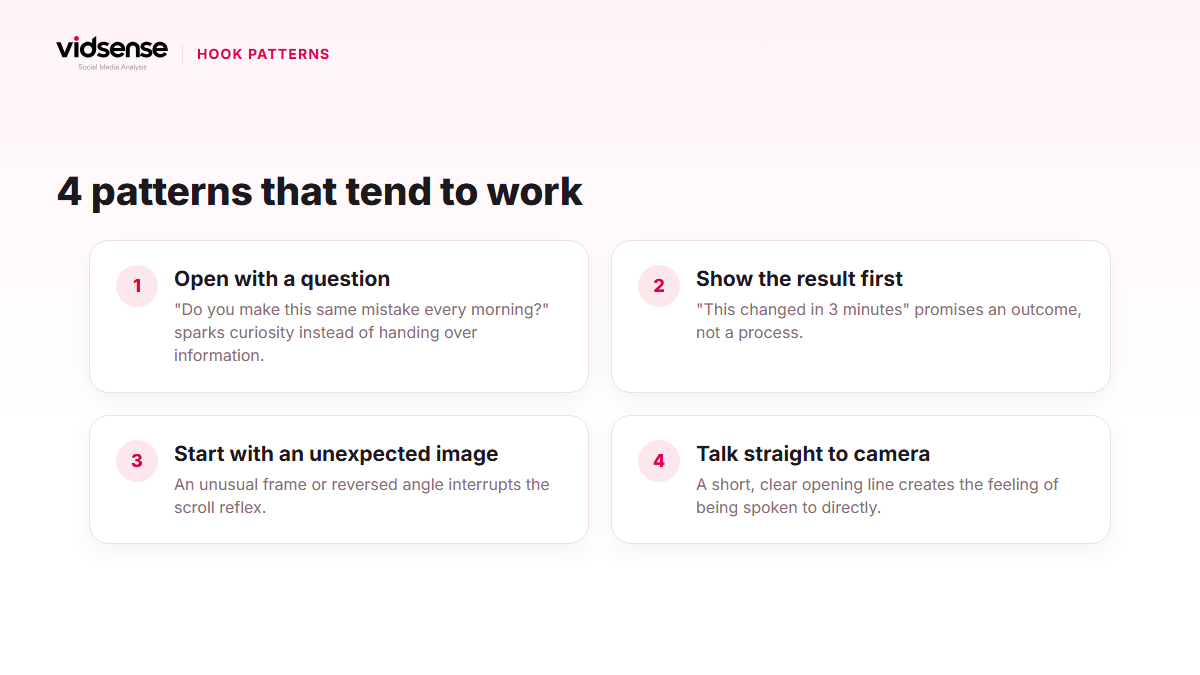
A question tied to the viewer's own situation creates a "this is about me" feeling. "Do you make this same mistake every morning?" sparks curiosity instead of just handing over information.
Hinting at what the viewer will find by the end gives them a reason to keep watching. "This changed in 3 minutes" promises an outcome, not a process — and outcomes pull attention harder than explanations.
An unusual frame, a reversed angle, or a sudden movement interrupts the scroll reflex — especially effective in the first half-second, before the viewer has consciously decided anything.
A face turned to camera with a short, clear opening line creates the feeling of being spoken to directly, which tends to hold attention longer than a voiceover over unrelated footage.
Check your content before you post it.
Use Content Check to see potential risk signals before you publish.
The hook isn't just visual. The on-screen text in the first frame should reinforce the spoken idea, not repeat it word for word. The caption's opening line should sustain the same curiosity — if the question raised in the hook gets answered immediately in the caption, the hook loses its pull.
A single video can be shot with more than one opening attempt. The most reliable way to learn which one actually works is testing the same content with different hooks and comparing the results.
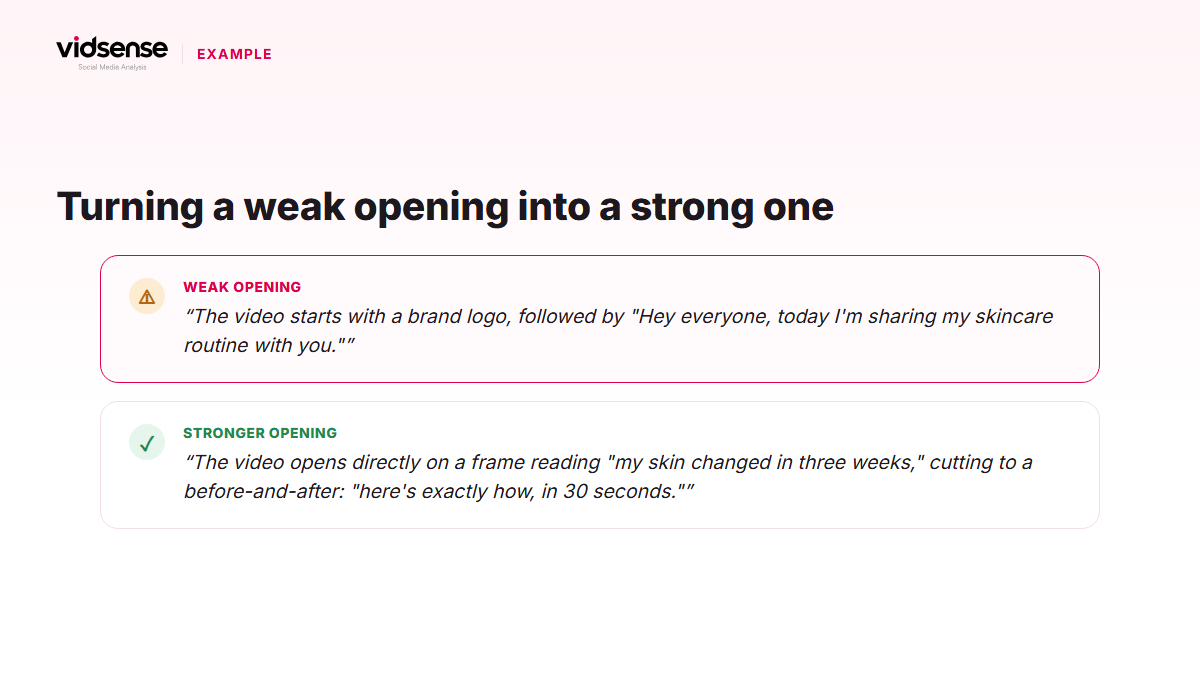
Weak opening: the video starts with a brand logo, followed by "Hey everyone, today I'm sharing my skincare routine with you." The viewer has no idea what they're about to see in the first 3 seconds, and most will scroll past.
Stronger opening: the video opens directly on an on-screen frame reading "my skin changed in three weeks," cutting to a before-and-after shot while the creator says "here's exactly how, in 30 seconds." The viewer sees both the outcome and the promise in the first frame; the logo and the intro line move to the closing seconds instead.
Both openings describe the same content — the difference is which piece of information comes first and which comes last.
Where should I test my hook? The most reliable approach is posting the same video, or a very similar one, with a few different openings and comparing which version holds viewers longer. A conclusion drawn from a single post can be misleading; a few trials show which hook pattern genuinely works for your audience.
VidSense's content check scores the hook as its own sub-score and gives feedback based on the transcript, before you publish. Create a free account to use the text check and, for videos or images, the content check.