RESOURCES / BLOG / GROWTH & ANALYTICS
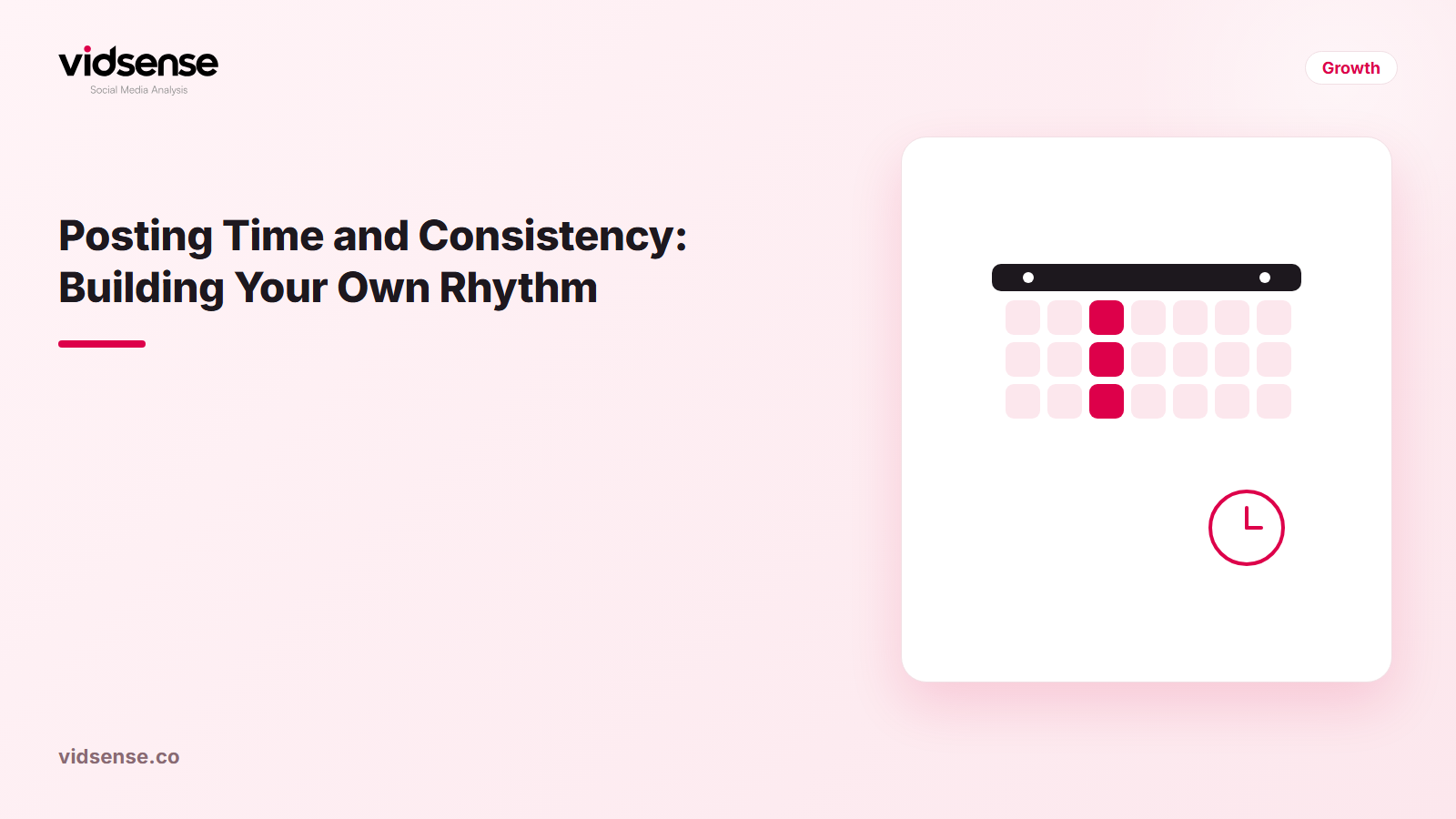
When your audience learns roughly when to expect content from you, engagement tends to become more consistent. Building a rhythm isn't really about finding one "best time" — it's about building a consistent pattern that fits your own audience's habits.
A rhythm also makes production easier: knowing in advance when you'll shoot, edit, and post cuts down on last-minute scrambling and helps you protect the quality of the content itself.
There's no universal "best time for everyone." Different sources recommend different hours because every account's audience is active in different time zones with different habits. A time that works for another account can mean nothing for yours.
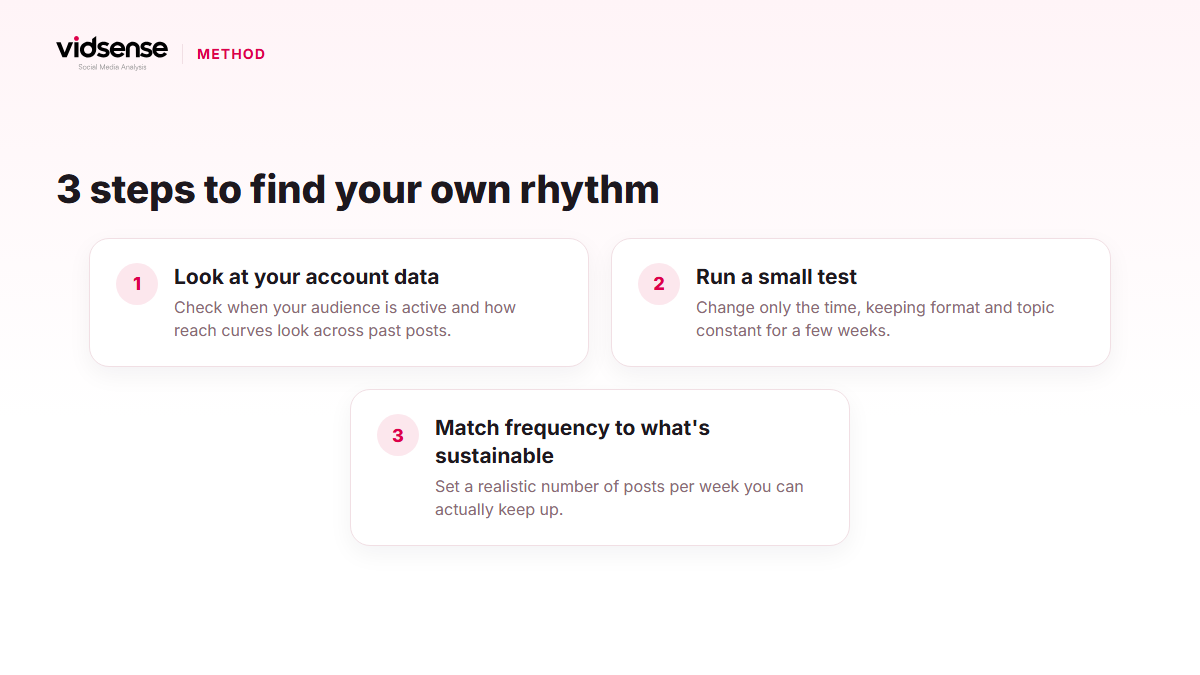
Once your account is connected, check when your audience is actually active and how reach and engagement curves look across past posts. A pattern that repeats at certain hours is your audience's real habit — and far more reliable than a generic tip borrowed from someone else's account.
Instead of changing several variables at once, change only the posting time and keep everything else — format, length, topic — constant, then observe over a few weeks.
Set a realistic number of posts per week. A pace you can't keep up eventually collapses into irregularity, and that breaks the rhythm you were trying to build. Starting with a frequency you can comfortably sustain, and raising it over time, works better than setting a target beyond your actual production capacity.
Check your content before you post it.
Use Content Check to see potential risk signals before you publish.
Consistency doesn't mean posting at the exact same hour every single day. A weekly pattern, say Tuesdays and Fridays, builds a rhythm too. What matters is that your audience can form an expectation.
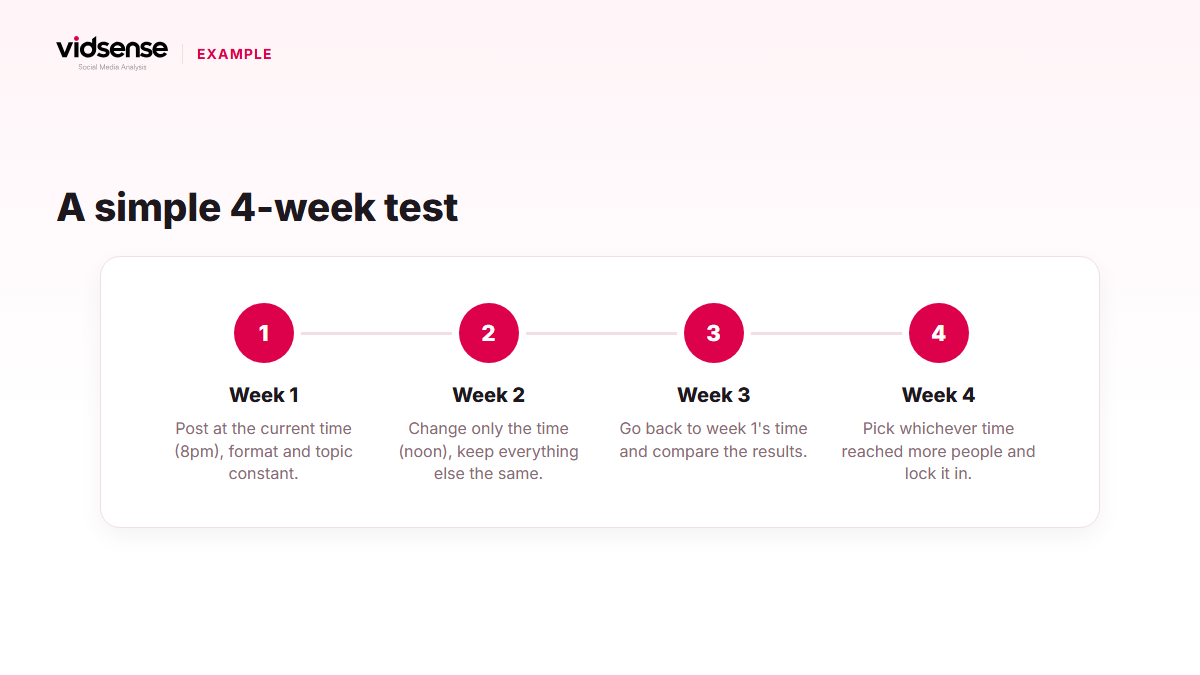
Week 1: post at the current time (say, 8pm), keeping format and topic constant, and note the results. Week 2: change only the time (say, to noon), keeping everything else the same. Week 3: go back to week 1's time and compare the results. Week 4: pick whichever time reached more people and lock it in.
This four-week test turns the "best time" search from guesswork into a data-based decision. What matters is keeping format, length, and topic constant throughout — otherwise it's impossible to tell which variable actually mattered.
Should I post more than once a day? There's no single right answer; sustainability is what matters. Posting twice a day and burning out a week later builds a worse rhythm than posting three times a week consistently. Setting a realistic frequency that matches your own production capacity is worth more than simply posting "more often."
VidSense's account analysis will arrive together with Instagram account connection; until then, you can track your posting rhythm with your own notes. Before your next post goes out, create a free account to use the text check and the content check.