RESOURCES / BLOG / POLICY
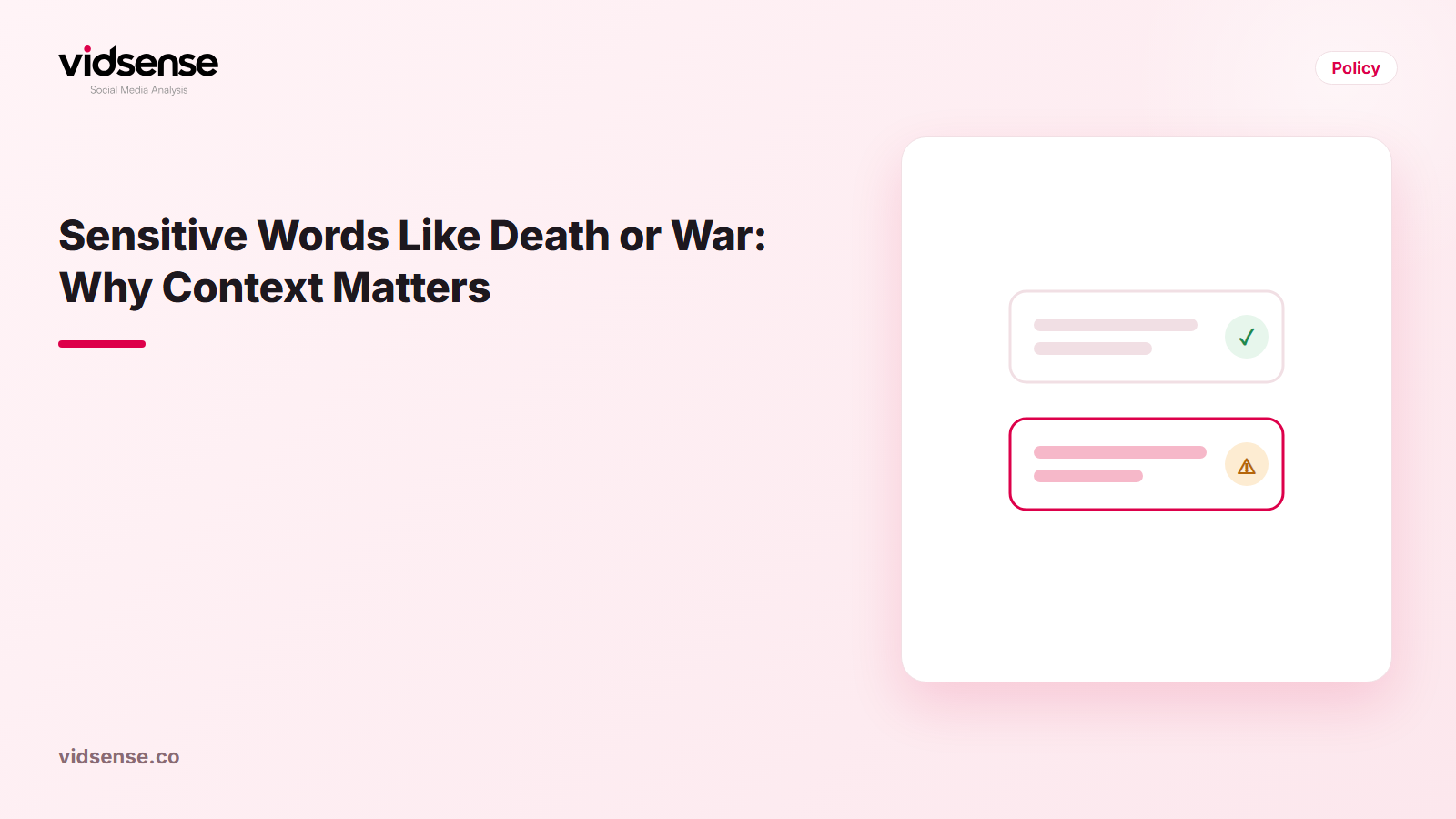
Meta's Community Standards don't ban words outright — they look at how a statement reads, who it targets, and what frame it's presented in. VidSense follows the same logic: words like "death," "war," or "kill" never create risk on their own. They're a signal that says "look here," nothing more.
"Deaths were very common during World War II" is a historical statement and carries no risk. "Death is coming very soon" is ominous, target-less, near-future, and framed by nothing — which is why it can read as a threat or distress signal. Same word, different reading.
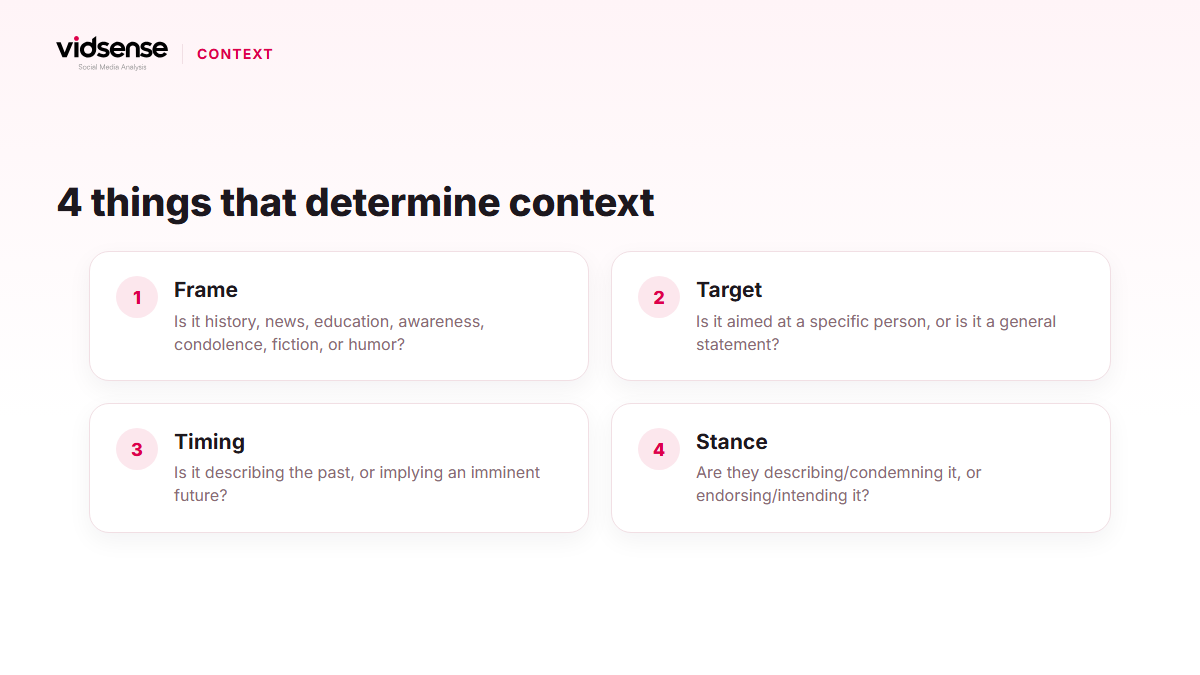
"I'm dying laughing" is an idiom with no literal meaning and carries no risk. "We're working ourselves to death on this project" is an established figure of speech. On the other hand, "We lost my grandfather, the funeral is tomorrow" contains a sensitive word (funeral) but is a statement of grief, not a threat. These examples show exactly why a word list alone can't make the call: the same root, in a different sentence, can mean something completely different.
Check your content before you post it.
Use Content Check to see potential risk signals before you publish.
A statement like "I don't want to live anymore" reads more as a distress signal than a threat. VidSense handles this kind of language supportively rather than punitively, typically pairing it with a suggestion to add a helpline resource. Awareness, recovery, or support-seeking content is never flagged as risk.
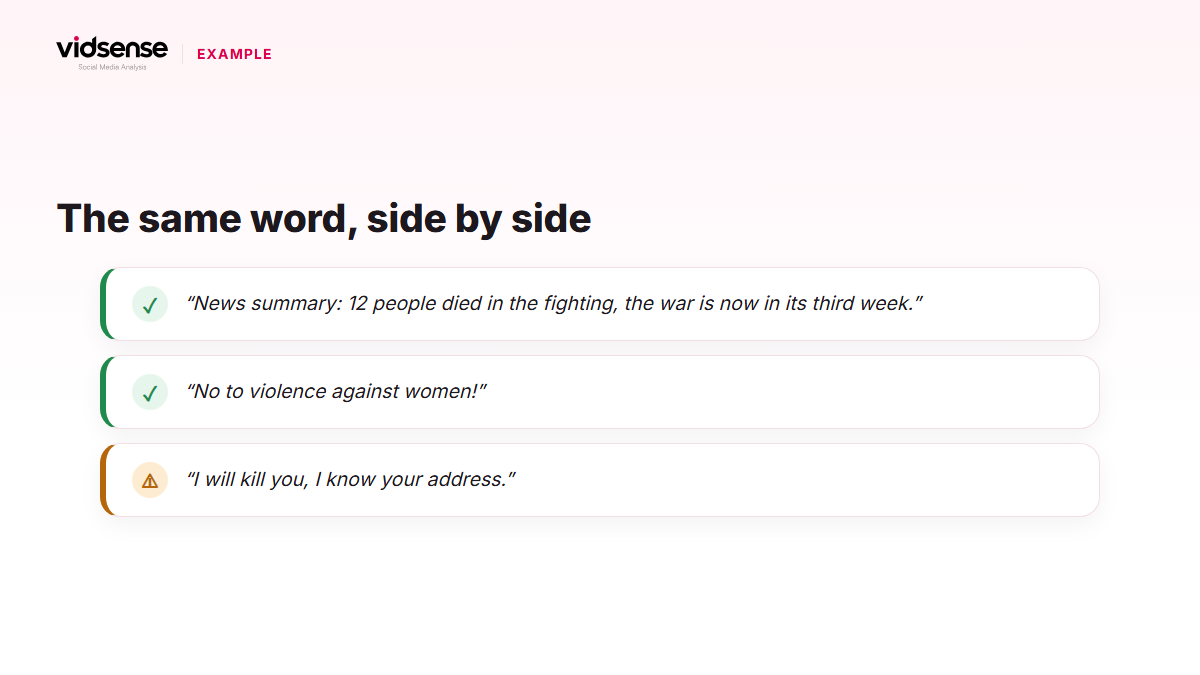
"News summary: 12 people died in the fighting, the war is now in its third week" is a news report — "war" and "died" appear, but because the frame is news, it carries no risk. "No to violence against women!" contains the word "violence" too, but it's a statement of condemnation, not a risk.
By contrast, "I will kill you, I know your address" has a specific target, a clear intent, and an implied means (the address). When all three show up together, the statement carries high risk. The difference isn't the choice of words — it's how target, intent, and framing come together in the sentence.
Should I remove a sensitive word from my caption entirely? Usually not. Adding context to the sentence tends to work better than removing the word: a short framing line like "this is a news summary," "this is my recovery story," or "this is a historical account" makes clear how the word should be read and cuts the risk significantly.
VidSense's policy engine evaluates the whole sentence, not the sensitive word alone, and always presents results as "possible risk" — never a verdict. Create a free account to use the text check and, for videos or images, the content check.