RESOURCES / BLOG / CONTENT
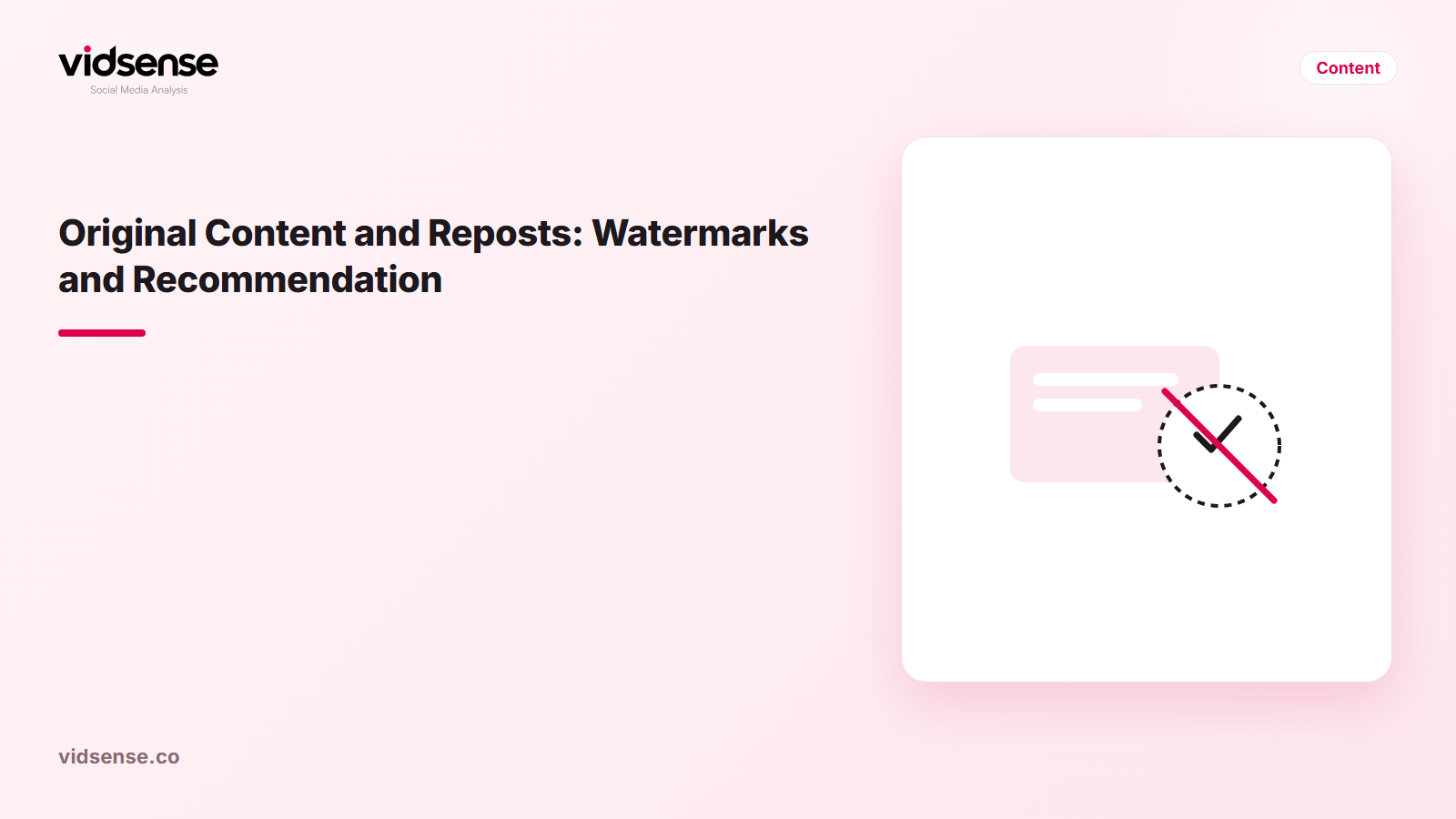
Instagram's recommendation guidelines can place content that's been downloaded from another platform, carries a visible watermark, or is reposted as-is into a lower-quality/non-original bucket. That content isn't removed — it may simply be shown less in recommended surfaces like Explore and Reels.
The logic behind this is simple: the platform tends to prefer showing its own users content that was made fresh within its own ecosystem. If the same video is already circulating across dozens of accounts, there's nothing genuinely "new" left to surface in recommended spaces.
A video carrying another app's watermark, a rival short-video platform's for instance, signals to the platform "this wasn't made here." That reads as a negative signal in originality assessment — it has nothing to do with how good the video itself is.
Sharing someone else's content as-is, without credit and without adding anything of your own, counts as a repost. Retelling the same idea in your own voice, with your own footage and your own angle, counts as original content. The difference comes down to whether you're adding new value for the viewer.
A simple way to test this before posting: ask yourself "what am I actually adding here?" If the honest answer is "nothing, I just copied it," that's a repost. If the answer is "my own commentary, my own footage, or my own experience," that's original content.
Sometimes referencing someone else's content, or joining a trend, is the point. In that case, clearly crediting the source (tagging, a "via" note), using Instagram's own repost feature, and adding your own commentary or contribution all reduce the risk.
Check your content before you post it.
Use Content Check to see potential risk signals before you publish.
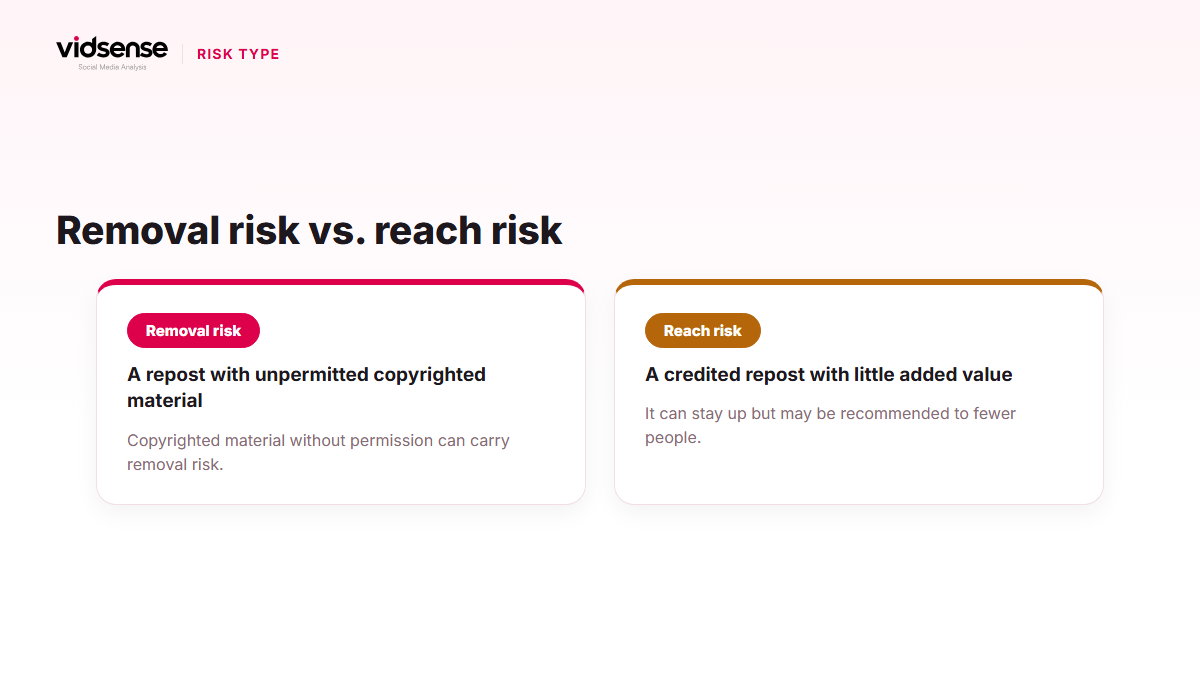
A repost that includes copyrighted material without permission can carry removal risk. A credited repost with little added value tends to carry reach risk instead — it can stay up but may be recommended to fewer people. Telling these two risk types apart helps you know which fix matters more.
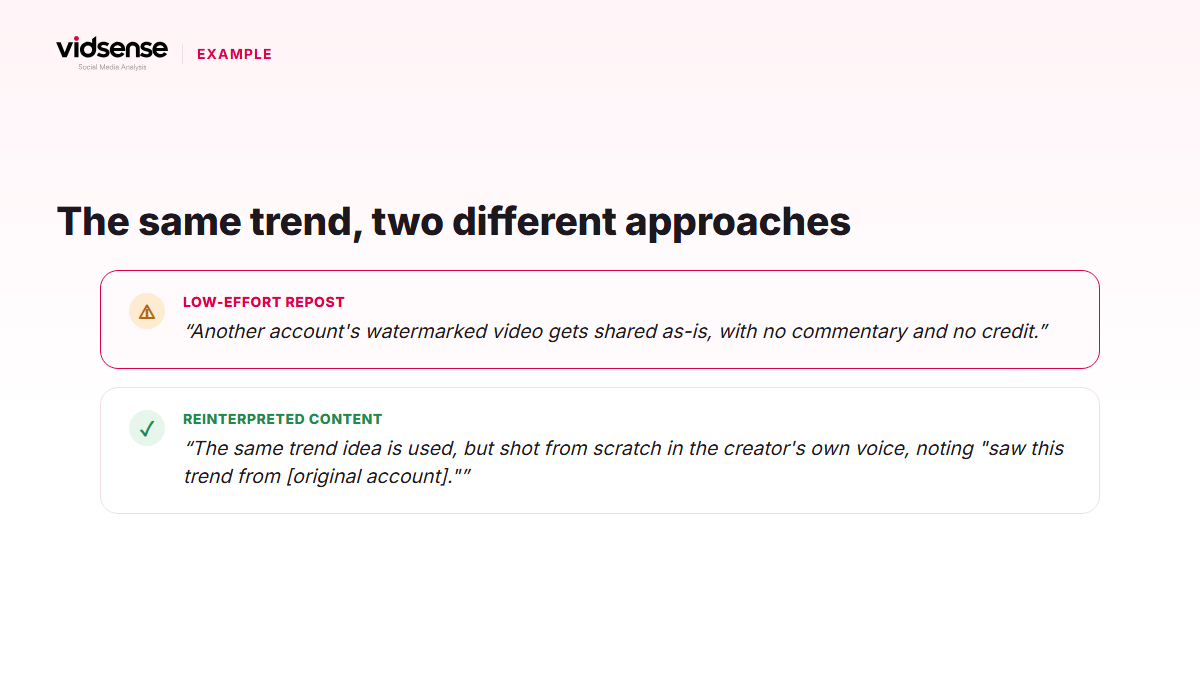
Low-effort repost: another account's video, still carrying a short-video platform's watermark, gets shared as-is with no commentary and no credit. This carries both an originality risk and a potential copyright risk.
Reinterpreted content: the same trend idea is used, but the video is shot from scratch, in the creator's own setting and voice, with a caption noting "saw this trend from [original account], made my own version." The same idea is used, but the content is genuinely remade and the source is clearly credited.
Does using a trending audio count as a repost? No. Using a trending sound with your own footage means adopting a format, and that counts as original content. The actual problem is sharing someone else's footage as if it were your own, without credit — it's about who the visuals belong to, not the audio or the format itself.
VidSense's content check can help you evaluate watermark and originality signals before you publish. Create a free account to use the text check and, for videos or images, the content check.